AASM - Ruby state machines




Index
- Upgrade from version 3 to 4
- Usage
- Callbacks
- Lifecycle
- The current event triggered
- Guards
- Transitions
- Multiple state machines per class
- Handling naming conflicts between multiple state machines
- Binding event
- Auto-generated Status Constants
- Extending AASM
- ActiveRecord
- Bang events
- Timestamps
- ActiveRecord enums
- Sequel
- Dynamoid
- Mongoid
- Nobrainer
- Redis
- Automatic Scopes
- Transaction support
- Pessimistic Locking
- Column name & migration
- Log State Changes
- Inspection
- Warning output
- RubyMotion support
- Testing
- RSpec
- Minitest
- Installation
- Manually from RubyGems.org
- Bundler
- Building your own gems
- Generators
- Test suite with Docker
- Latest changes
- Questions?
- Maintainers
- Contributing
- Warranty
- License
This package contains AASM, a library for adding finite state machines to Ruby classes.
AASM started as the acts_as_state_machine plugin but has evolved into a more generic library
that no longer targets only ActiveRecord models. It currently provides adapters for many
ORMs but it can be used for any Ruby class, no matter what parent class it has (if any).
Upgrade from version 3 to 4
Take a look at the README_FROM_VERSION_3_TO_4 for details how to switch from version 3.x to 4.0 of AASM.
Usage
Adding a state machine is as simple as including the AASM module and start defining
states and events together with their transitions:
class Job
  include AASM

  aasm do
    state :sleeping, initial: true
    state :running, :cleaning

    event :run do
      transitions from: :sleeping, to: :running
    end

    event :clean do
      transitions from: :running, to: :cleaning
    end

    event :sleep do
      transitions from: [:running, :cleaning], to: :sleeping
    end
  end

end
This provides you with a couple of public methods for instances of the class Job:
job = Job.new
job.sleeping? # => true
job.may_run?  # => true
job.run
job.running?  # => true
job.sleeping? # => false
job.may_run?  # => false
job.run       # => raises AASM::InvalidTransition
If you don’t like exceptions and prefer a simple true or false as response, tell
AASM not to be whiny:
class Job
  ...
  aasm whiny_transitions: false do
    ...
  end
end

job.running?  # => true
job.may_run?  # => false
job.run       # => false
When firing an event, you can pass a block to the method, it will be called only if
the transition succeeds :
  job.run do
    job.user.notify_job_ran # Will be called if job.may_run? is true
  end
Callbacks
You can define a number of callbacks for your events, transitions and states. These methods, Procs or classes will be
called when certain criteria are met, like entering a particular state:
class Job
  include AASM

  aasm do
    state :sleeping, initial: true, before_enter: :do_something
    state :running, before_enter: Proc.new { do_something && notify_somebody }
    state :finished

    after_all_transitions :log_status_change

    event :run, after: :notify_somebody do
      before do
        log('Preparing to run')
      end

      transitions from: :sleeping, to: :running, after: Proc.new {|*args| set_process(*args) }
      transitions from: :running, to: :finished, after: LogRunTime
    end

    event :sleep do
      after do
        ...
      end
      error do |e|
        ...
      end
      transitions from: :running, to: :sleeping
    end
  end

  def log_status_change
    puts "changing from #{aasm.from_state} to #{aasm.to_state} (event: #{aasm.current_event})"
  end

  def set_process(name)
    ...
  end

  def do_something
    ...
  end

  def notify_somebody
    ...
  end

end

class LogRunTime
  def call
    log "Job was running for X seconds"
  end
end
In this case do_something is called before actually entering the state sleeping,
while notify_somebody is called after the transition run (from sleeping to running)
is finished.
AASM will also initialize LogRunTime and run the call method for you after the transition from running to finished in the example above. You can pass arguments to the class by defining an initialize method on it, like this:
Note that Procs are executed in the context of a record, it means that you don’t need to expect the record as an argument, just call the methods you need.
class LogRunTime
  # optional args parameter can be omitted, but if you define initialize
  # you must accept the model instance as the first parameter to it.
  def initialize(job, args = {})
    @job = job
  end

  def call
    log "Job was running for #{@job.run_time} seconds"
  end
end
Parameters
You can pass parameters to events:
  job = Job.new
  job.run(:defragmentation)
All guards and after callbacks will receive these parameters. In this case set_process would be called with
:defragmentation argument.
If the first argument to the event is a state (e.g. :running or :finished), the first argument is consumed and
the state machine will attempt to transition to that state. Add comma separated parameter for guards and callbacks
  job = Job.new
  job.run(:running, :defragmentation)
In this case set_process won’t be called, job will transition to running state and callback will receive
:defragmentation as parameter
Error Handling
In case of an error during the event processing the error is rescued and passed to :error
callback, which can handle it or re-raise it for further propagation.
Also, you can define a method that will be called if any event fails:
def aasm_event_failed(event_name, old_state_name)
  # use custom exception/messages, report metrics, etc
end
During the transition’s :after callback (and reliably only then, or in the global
after_all_transitions callback) you can access the originating state (the from-state)
and the target state (the to state), like this:
  def set_process(name)
    logger.info "from #{aasm.from_state} to #{aasm.to_state}"
  end
Lifecycle
Here you can see a list of all possible callbacks, together with their order of calling:
begin
  event           before_all_events
  event           before
  event           guards
  transition      guards
  old_state       before_exit
  old_state       exit
                  after_all_transitions
  transition      after
  new_state       before_enter
  new_state       enter
  ...update state...
  event           before_success      # if persist successful
  transition      success             # if persist successful, database update not guaranteed
  event           success             # if persist successful, database update not guaranteed
  old_state       after_exit
  new_state       after_enter
  event           after
  event           after_all_events
rescue
  event           error
  event           error_on_all_events
ensure
  event           ensure
  event           ensure_on_all_events
end
Use event’s after_commit callback if it should be fired after database update.
The current event triggered
While running the callbacks you can easily retrieve the name of the event triggered
by using aasm.current_event:
  # taken the example callback from above
  def do_something
    puts "triggered #{aasm.current_event}"
  end
and then
  job = Job.new

  # without bang
  job.sleep # => triggered :sleep

  # with bang
  job.sleep! # => triggered :sleep!
Guards
Let’s assume you want to allow particular transitions only if a defined condition is
given. For this you can set up a guard per transition, which will run before actually
running the transition. If the guard returns false the transition will be
denied (raising AASM::InvalidTransition):
class Cleaner
  include AASM

  aasm do
    state :idle, initial: true
    state :cleaning

    event :clean do
      transitions from: :idle, to: :cleaning, guard: :cleaning_needed?
    end

    event :clean_if_needed do
      transitions from: :idle, to: :cleaning do
        guard do
          cleaning_needed?
        end
      end
      transitions from: :idle, to: :idle
    end

    event :clean_if_dirty do
      transitions from: :idle, to: :cleaning, guard: :if_dirty?
    end
  end

  def cleaning_needed?
    false
  end

  def if_dirty?(status)
    status == :dirty
  end
end

job = Cleaner.new
job.may_clean?            # => false
job.clean                 # => raises AASM::InvalidTransition
job.may_clean_if_needed?  # => true
job.clean_if_needed!      # idle

job.clean_if_dirty(:clean) # => raises AASM::InvalidTransition
job.clean_if_dirty(:dirty) # => true
You can even provide a number of guards, which all have to succeed to proceed
    def walked_the_dog?; ...; end

    event :sleep do
      transitions from: :running, to: :sleeping, guards: [:cleaning_needed?, :walked_the_dog?]
    end
If you want to provide guards for all transitions within an event, you can use event guards
    event :sleep, guards: [:walked_the_dog?] do
      transitions from: :running, to: :sleeping, guards: [:cleaning_needed?]
      transitions from: :cleaning, to: :sleeping
    end
If you prefer a more Ruby-like guard syntax, you can use if and unless as well:
    event :clean do
      transitions from: :running, to: :cleaning, if: :cleaning_needed?
    end

    event :sleep do
      transitions from: :running, to: :sleeping, unless: :cleaning_needed?
    end
  end
You can invoke a Class instead of a method if the Class responds to call
    event :sleep do
      transitions from: :running, to: :sleeping, guards: Dog
    end
  class Dog
    def call
      cleaning_needed? && walked?
    end
    ...
  end
Transitions
In the event of having multiple transitions for an event, the first transition that successfully completes will stop other transitions in the same event from being processed.
require 'aasm'

class Job
  include AASM

  aasm do
    state :stage1, initial: true
    state :stage2
    state :stage3
    state :completed

    event :stage1_completed do
      transitions from: :stage1, to: :stage3, guard: :stage2_completed?
      transitions from: :stage1, to: :stage2
    end
  end

  def stage2_completed?
    true
  end
end

job = Job.new
job.stage1_completed
job.aasm.current_state # stage3
You can define transition from any defined state by omitting from:
event :abort do
  transitions to: :aborted
end
Display name for state
You can define display name for state using :display option
class Job
  include AASM

  aasm do
    state :stage1, initial: true, display: 'First Stage'
    state :stage2
    state :stage3
  end
end

job = Job.new
job.aasm.human_state
Multiple state machines per class
Multiple state machines per class are supported. Be aware though that AASM has been
built with one state machine per class in mind. Nonetheless, here’s how to do it (see below). Please note that you will need to specify database columns for where your pertinent states will be stored - we have specified two columns move_state and work_state in the example below. See the Column name & migration section for further info.
class SimpleMultipleExample
  include AASM
  aasm(:move, column: 'move_state') do
    state :standing, initial: true
    state :walking
    state :running

    event :walk do
      transitions from: :standing, to: :walking
    end
    event :run do
      transitions from: [:standing, :walking], to: :running
    end
    event :hold do
      transitions from: [:walking, :running], to: :standing
    end
  end

  aasm(:work, column: 'work_state') do
    state :sleeping, initial: true
    state :processing

    event :start do
      transitions from: :sleeping, to: :processing
    end
    event :stop do
      transitions from: :processing, to: :sleeping
    end
  end
end

simple = SimpleMultipleExample.new

simple.aasm(:move).current_state
# => :standing
simple.aasm(:work).current_state
# => :sleeping

simple.start
simple.aasm(:move).current_state
# => :standing
simple.aasm(:work).current_state
# => :processing
Handling naming conflicts between multiple state machines
AASM doesn’t prohibit to define the same event in more than one state
machine. If no namespace is provided, the latest definition “wins” and
overrides previous definitions. Nonetheless, a warning is issued:
SimpleMultipleExample: overriding method 'run'!.
Alternatively, you can provide a namespace for each state machine:
class NamespacedMultipleExample
  include AASM
  aasm(:status) do
    state :unapproved, initial: true
    state :approved

    event :approve do
      transitions from: :unapproved, to: :approved
    end

    event :unapprove do
      transitions from: :approved, to: :unapproved
    end
  end

  aasm(:review_status, namespace: :review) do
    state :unapproved, initial: true
    state :approved

    event :approve do
      transitions from: :unapproved, to: :approved
    end

    event :unapprove do
      transitions from: :approved, to: :unapproved
    end
  end
end

namespaced = NamespacedMultipleExample.new

namespaced.aasm(:status).current_state
# => :unapproved
namespaced.aasm(:review_status).current_state
# => :unapproved
namespaced.approve_review
namespaced.aasm(:review_status).current_state
# => :approved
All AASM class- and instance-level aasm methods accept a state machine selector.
So, for example, to use inspection on a class level, you have to use
SimpleMultipleExample.aasm(:move).states.map(&:name)
# => [:standing, :walking, :running]
Binding event
Allow an event to be bound to another
class Example
  include AASM

  aasm(:work) do
    state :sleeping, initial: true
    state :processing

    event :start do
      transitions from: :sleeping, to: :processing
    end
    event :stop do
      transitions from: :processing, to: :sleeping
    end
  end

  aasm(:question) do
    state :answered, initial: true
    state :asked

    event :ask, binding_event: :start do
      transitions from: :answered, to: :asked
    end
    event :answer, binding_event: :stop do
      transitions from: :asked, to: :answered
    end
  end
end

example = Example.new
example.aasm(:work).current_state #=> :sleeping
example.aasm(:question).current_state #=> :answered
example.ask
example.aasm(:work).current_state #=> :processing
example.aasm(:question).current_state #=> :asked
Auto-generated Status Constants
AASM automatically generates constants
for each status so you don’t have to explicitly define them.
class Foo
  include AASM

  aasm do
    state :initialized
    state :calculated
    state :finalized
  end
end

> Foo::STATE_INITIALIZED
#=> :initialized
> Foo::STATE_CALCULATED
#=> :calculated
Extending AASM
AASM allows you to easily extend AASM::Base for your own application purposes.
Let’s suppose we have common logic across many AASM models. We can embody this logic in a sub-class of AASM::Base.
class CustomAASMBase < AASM::Base
  # A custom transiton that we want available across many AASM models.
  def count_transitions!
    klass.class_eval do
      aasm with_klass: CustomAASMBase do
        after_all_transitions :increment_transition_count
      end
    end
  end

  # A custom annotation that we want available across many AASM models.
  def requires_guards!
    klass.class_eval do
      attr_reader :authorizable_called,
        :transition_count,
        :fillable_called

      def authorizable?
        @authorizable_called = true
      end

      def fillable?
        @fillable_called = true
      end

      def increment_transition_count
        @transition_count ||= 0
        @transition_count += 1
      end
    end
  end
end
When we declare our model that has an AASM state machine, we simply declare the AASM block with a :with_klass key to our own class.
class SimpleCustomExample
  include AASM

  # Let's build an AASM state machine with our custom class.
  aasm with_klass: CustomAASMBase do
    requires_guards!
    count_transitions!

    state :initialised, initial: true
    state :filled_out
    state :authorised

    event :fill_out do
      transitions from: :initialised, to: :filled_out, guard: :fillable?
    end
    event :authorise do
      transitions from: :filled_out, to: :authorised, guard: :authorizable?
    end
  end
end
ActiveRecord
AASM comes with support for ActiveRecord and allows automatic persisting of the object’s
state in the database.
Add gem 'after_commit_everywhere', '~> 1.0' to your Gemfile.
class Job < ActiveRecord::Base
  include AASM

  aasm do # default column: aasm_state
    state :sleeping, initial: true
    state :running

    event :run do
      transitions from: :sleeping, to: :running
    end

    event :sleep do
      transitions from: :running, to: :sleeping
    end
  end

end
Bang events
You can tell AASM to auto-save the object or leave it unsaved
job = Job.new
job.run   # not saved
job.run!  # saved

# or
job.aasm.fire(:run) # not saved
job.aasm.fire!(:run) # saved
Saving includes running all validations on the Job class. If
whiny_persistence flag is set to true, exception is raised in case of
failure. If whiny_persistence flag is set to false, methods with a bang return
true if the state transition is successful or false if an error occurs.
If you want make sure the state gets saved without running validations (and
thereby maybe persisting an invalid object state), simply tell AASM to skip the
validations. Be aware that when skipping validations, only the state column will
be updated in the database (just like ActiveRecord update_column is working).
class Job < ActiveRecord::Base
  include AASM

  aasm skip_validation_on_save: true do
    state :sleeping, initial: true
    state :running

    event :run do
      transitions from: :sleeping, to: :running
    end

    event :sleep do
      transitions from: :running, to: :sleeping
    end
  end

end
Also, you can skip the validation at instance level with some_event_name_without_validation! method.
With this you have the flexibility of having validation for all your transitions by default and then skip it wherever required.
Please note that only state column will be updated as mentioned in the above example.
job.run_without_validation!
If you want to make sure that the AASM column for storing the state is not directly assigned,
configure AASM to not allow direct assignment, like this:
class Job < ActiveRecord::Base
  include AASM

  aasm no_direct_assignment: true do
    state :sleeping, initial: true
    state :running

    event :run do
      transitions from: :sleeping, to: :running
    end
  end

end
resulting in this:
job = Job.create
job.aasm_state # => 'sleeping'
job.aasm_state = :running # => raises AASM::NoDirectAssignmentError
job.aasm_state # => 'sleeping'
Timestamps
You can tell AASM to try to write a timestamp whenever a new state is entered.
If timestamps: true is set, AASM will look for a field named like the new state plus _at and try to fill it:
class Job < ActiveRecord::Base
  include AASM

  aasm timestamps: true do
    state :sleeping, initial: true
    state :running

    event :run do
      transitions from: :sleeping, to: :running
    end
  end
end
resulting in this:
job = Job.create
job.running_at # => nil
job.run!
job.running_at # => 2020-02-20 20:00:00
Missing timestamp fields are silently ignored, so it is not necessary to have setters (such as ActiveRecord columns) for all states when using this option.
ActiveRecord enums
You can use
enumerations
in Rails 4.1+ for your state column:
class Job < ActiveRecord::Base
  include AASM

  enum state: {
    sleeping: 5,
    running: 99
  }

  aasm column: :state, enum: true do
    state :sleeping, initial: true
    state :running
  end
end
You can explicitly pass the name of the method which provides access
to the enumeration mapping as a value of enum, or you can simply
set it to true. In the latter case AASM will try to use
pluralized column name to access possible enum states.
Furthermore, if your column has integer type (which is normally the
case when you’re working with Rails enums), you can omit :enum
setting — AASM auto-detects this situation and enabled enum
support. If anything goes wrong, you can disable enum functionality
and fall back to the default behavior by setting :enum
to false.
Sequel
AASM also supports Sequel besides ActiveRecord, and Mongoid.
class Job < Sequel::Model
  include AASM

  aasm do # default column: aasm_state
    ...
  end
end
However it’s not yet as feature complete as ActiveRecord. For example, there are
scopes defined yet. See Automatic Scopes.
Dynamoid
Since version 4.8.0 AASM also supports Dynamoid as
persistence ORM.
Mongoid
AASM also supports persistence to Mongodb if you’re using Mongoid. Make sure
to include Mongoid::Document before you include AASM.
class Job
  include Mongoid::Document
  include AASM
  field :aasm_state
  aasm do
    ...
  end
end
NoBrainer
AASM also supports persistence to RethinkDB
if you’re using Nobrainer.
Make sure to include NoBrainer::Document before you include AASM.
class Job
  include NoBrainer::Document
  include AASM
  field :aasm_state
  aasm do
    ...
  end
end
Redis
AASM also supports persistence in Redis via
Redis::Objects.
Make sure to include Redis::Objects before you include AASM. Note that non-bang
events will work as bang events, persisting the changes on every call.
class User
  include Redis::Objects
  include AASM

  aasm do
  end
end
Automatic Scopes
AASM will automatically create scope methods for each state in the model.
class Job < ActiveRecord::Base
  include AASM

  aasm do
    state :sleeping, initial: true
    state :running
    state :cleaning
  end

  def self.sleeping
    "This method name is already in use"
  end
end
class JobsController < ApplicationController
  def index
    @running_jobs = Job.running
    @recent_cleaning_jobs = Job.cleaning.where('created_at >=  ?', 3.days.ago)

    # @sleeping_jobs = Job.sleeping   #=> "This method name is already in use"
  end
end
If you don’t need scopes (or simply don’t want them), disable their creation when
defining the AASM states, like this:
class Job < ActiveRecord::Base
  include AASM

  aasm create_scopes: false do
    state :sleeping, initial: true
    state :running
    state :cleaning
  end
end
Transaction support
Since version 3.0.13 AASM supports ActiveRecord transactions. So whenever a transition
callback or the state update fails, all changes to any database record are rolled back.
Mongodb does not support transactions.
There are currently 3 transactional callbacks that can be handled on the event, and 2 transactional callbacks for all events.
  event           before_all_transactions
  event           before_transaction
  event           aasm_fire_event (within transaction)
  event           after_commit (if event successful)
  event           after_transaction
  event           after_all_transactions
If you want to make sure a depending action happens only after the transaction is committed,
use the after_commit callback along with the auto-save (bang) methods, like this:
class Job < ActiveRecord::Base
  include AASM

  aasm do
    state :sleeping, initial: true
    state :running

    event :run, after_commit: :notify_about_running_job do
      transitions from: :sleeping, to: :running
    end
  end

  def notify_about_running_job
    ...
  end
end

job = Job.where(state: 'sleeping').first!
job.run! # Saves the model and triggers the after_commit callback
Note that the following will not run the after_commit callbacks because
the auto-save method is not used:
job = Job.where(state: 'sleeping').first!
job.run
job.save! #notify_about_running_job is not run
Please note that :after_commit AASM callbacks behaves around custom implementation
of transaction pattern rather than a real-life DB transaction. This fact still causes
the race conditions and redundant callback calls within nested transaction. In order
to fix that it’s highly recommended to add gem 'after_commit_everywhere', '~> 1.0'
to your Gemfile.
If you want to encapsulate state changes within an own transaction, the behavior
of this nested transaction might be confusing. Take a look at
ActiveRecord Nested Transactions
if you want to know more about this. Nevertheless, AASM by default requires a new transaction
transaction(requires_new: true). You can override this behavior by changing
the configuration
class Job < ActiveRecord::Base
  include AASM

  aasm requires_new_transaction: false do
    ...
  end

  ...
end
which then leads to transaction(requires_new: false), the Rails default.
Additionally, if you do not want any of your ActiveRecord actions to be
wrapped in a transaction, you can specify the use_transactions flag. This can
be useful if you want want to persist things to the database that happen as a
result of a transaction or callback, even when some error occurs. The
use_transactions flag is true by default.
class Job < ActiveRecord::Base
  include AASM

  aasm use_transactions: false do
    ...
  end

  ...
end
Pessimistic Locking
AASM supports ActiveRecord pessimistic locking via with_lock for database persistence layers.
| Option | Purpose |
|---|---|
false (default) |
No lock is obtained |
true |
Obtain a blocking pessimistic lock e.g. FOR UPDATE |
| String | Obtain a lock based on the SQL string e.g. FOR UPDATE NOWAIT |
class Job < ActiveRecord::Base
  include AASM

  aasm requires_lock: true do
    ...
  end

  ...
end
class Job < ActiveRecord::Base
  include AASM

  aasm requires_lock: 'FOR UPDATE NOWAIT' do
    ...
  end

  ...
end
Column name & migration
As a default AASM uses the column aasm_state to store the states. You can override
this by defining your favorite column name, using :column like this:
class Job < ActiveRecord::Base
  include AASM

  aasm column: :my_state do
    ...
  end

  aasm :another_state_machine, column: :second_state do
    ...
  end
end
Whatever column name is used, make sure to add a migration to provide this column
(of type string).
Do not add default value for column at the database level. If you add default
value in database then AASM callbacks on the initial state will not be fired upon
instantiation of the model.
class AddJobState < ActiveRecord::Migration
  def self.up
    add_column :jobs, :aasm_state, :string
  end

  def self.down
    remove_column :jobs, :aasm_state
  end
end
Log State Changes
Logging state change can be done using paper_trail gem
Example of implementation can be found here https://github.com/nitsujri/aasm-papertrail-example
Inspection
AASM supports query methods for states and events
Given the following Job class:
class Job
  include AASM

  aasm do
    state :sleeping, initial: true
    state :running, :cleaning

    event :run do
      transitions from: :sleeping, to: :running
    end

    event :clean do
      transitions from: :running, to: :cleaning, guard: :cleaning_needed?
    end

    event :sleep do
      transitions from: [:running, :cleaning], to: :sleeping
    end
  end

  def cleaning_needed?
    false
  end
end
# show all states
Job.aasm.states.map(&:name)
#=> [:sleeping, :running, :cleaning]

job = Job.new

# show all permitted states (from initial state)
job.aasm.states(permitted: true).map(&:name)
#=> [:running]

# List all the permitted transitions(event and state pairs) from initial state
job.aasm.permitted_transitions
#=> [{ :event => :run, :state => :running }]

job.run
job.aasm.states(permitted: true).map(&:name)
#=> [:sleeping]

# show all non permitted states
job.aasm.states(permitted: false).map(&:name)
#=> [:cleaning]

# show all possible (triggerable) events from the current state
job.aasm.events.map(&:name)
#=> [:clean, :sleep]

# show all permitted events
job.aasm.events(permitted: true).map(&:name)
#=> [:sleep]

# show all non permitted events
job.aasm.events(permitted: false).map(&:name)
#=> [:clean]

# show all possible events except a specific one
job.aasm.events(reject: :sleep).map(&:name)
#=> [:clean]

# list states for select
Job.aasm.states_for_select
#=> [["Sleeping", "sleeping"], ["Running", "running"], ["Cleaning", "cleaning"]]

# show permitted states with guard parameter
job.aasm.states({permitted: true}, guard_parameter).map(&:name)
Warning output
Warnings are by default printed to STDERR. If you want to log those warnings to another output,
use
class Job
  include AASM

  aasm logger: Rails.logger do
    ...
  end
end
You can hide warnings by setting AASM::Configuration.hide_warnings = true
RubyMotion support
Now supports CodeDataQuery !
However I’m still in the process of submitting my compatibility updates to their repository.
In the meantime you can use my fork, there may still be some minor issues but I intend to extensively use it myself, so fixes should come fast.
Warnings:
- Due to RubyMotion Proc’s lack of ‘source_location’ method, it may be harder to find out the origin of a “cannot transition from” error. I would recommend using the ‘instance method symbol / string’ way whenever possible when defining guardians and callbacks.
Testing
RSpec
AASM provides some matchers for RSpec:
transition_from,have_state,allow_event- and
allow_transition_to.
Installation Instructions:
- Add
require 'aasm/rspec'to yourspec_helper.rbfile.
Examples Of Usage in Rspec:
# classes with only the default state machine
job = Job.new
expect(job).to transition_from(:sleeping).to(:running).on_event(:run)
expect(job).not_to transition_from(:sleeping).to(:cleaning).on_event(:run)
expect(job).to have_state(:sleeping)
expect(job).not_to have_state(:running)
expect(job).to allow_event :run
expect(job).to_not allow_event :clean
expect(job).to allow_transition_to(:running)
expect(job).to_not allow_transition_to(:cleaning)
# on_event also accept multiple arguments
expect(job).to transition_from(:sleeping).to(:running).on_event(:run, :defragmentation)

# classes with multiple state machine
multiple = SimpleMultipleExample.new
expect(multiple).to transition_from(:standing).to(:walking).on_event(:walk).on(:move)
expect(multiple).to_not transition_from(:standing).to(:running).on_event(:walk).on(:move)
expect(multiple).to have_state(:standing).on(:move)
expect(multiple).not_to have_state(:walking).on(:move)
expect(multiple).to allow_event(:walk).on(:move)
expect(multiple).to_not allow_event(:hold).on(:move)
expect(multiple).to allow_transition_to(:walking).on(:move)
expect(multiple).to_not allow_transition_to(:running).on(:move)
expect(multiple).to transition_from(:sleeping).to(:processing).on_event(:start).on(:work)
expect(multiple).to_not transition_from(:sleeping).to(:sleeping).on_event(:start).on(:work)
expect(multiple).to have_state(:sleeping).on(:work)
expect(multiple).not_to have_state(:processing).on(:work)
expect(multiple).to allow_event(:start).on(:move)
expect(multiple).to_not allow_event(:stop).on(:move)
expect(multiple).to allow_transition_to(:processing).on(:move)
expect(multiple).to_not allow_transition_to(:sleeping).on(:move)
# allow_event also accepts arguments
expect(job).to allow_event(:run).with(:defragmentation)
Minitest
AASM provides assertions and rspec-like expectations for Minitest.
Assertions
List of supported assertions: assert_have_state, refute_have_state, assert_transitions_from, refute_transitions_from, assert_event_allowed, refute_event_allowed, assert_transition_to_allowed, refute_transition_to_allowed.
Examples Of Usage (Minitest):
Add require 'aasm/minitest' to your test_helper.rb file and use them like this:
# classes with only the default state machine
job = Job.new
assert_transitions_from job, :sleeping, to: :running, on_event: :run
refute_transitions_from job, :sleeping, to: :cleaning, on_event: :run
assert_have_state job, :sleeping
refute_have_state job, :running
assert_event_allowed job, :run
refute_event_allowed job, :clean
assert_transition_to_allowed job, :running
refute_transition_to_allowed job, :cleaning
# on_event also accept arguments
assert_transitions_from job, :sleeping, :defragmentation, to: :running, on_event: :run

# classes with multiple state machine
multiple = SimpleMultipleExample.new
assert_transitions_from multiple, :standing, to: :walking, on_event: :walk, on: :move
refute_transitions_from multiple, :standing, to: :running, on_event: :walk, on: :move
assert_have_state multiple, :standing, on: :move
refute_have_state multiple, :walking, on: :move
assert_event_allowed multiple, :walk, on: :move
refute_event_allowed multiple, :hold, on: :move
assert_transition_to_allowed multiple, :walking, on: :move
refute_transition_to_allowed multiple, :running, on: :move
assert_transitions_from multiple, :sleeping, to: :processing, on_event: :start, on: :work
refute_transitions_from multiple, :sleeping, to: :sleeping, on_event: :start, on: :work
assert_have_state multiple, :sleeping, on: :work
refute_have_state multiple, :processing, on: :work
assert_event_allowed multiple, :start, on: :move
refute_event_allowed multiple, :stop, on: :move
assert_transition_to_allowed multiple, :processing, on: :move
refute_transition_to_allowed multiple, :sleeping, on: :move
Expectations
List of supported expectations: must_transition_from, wont_transition_from, must_have_state, wont_have_state, must_allow_event, wont_allow_event, must_allow_transition_to, wont_allow_transition_to.
Add require 'aasm/minitest_spec' to your test_helper.rb file and use them like this:
# classes with only the default state machine
job = Job.new
job.must_transition_from :sleeping, to: :running, on_event: :run
job.wont_transition_from :sleeping, to: :cleaning, on_event: :run
job.must_have_state :sleeping
job.wont_have_state :running
job.must_allow_event :run
job.wont_allow_event :clean
job.must_allow_transition_to :running
job.wont_allow_transition_to :cleaning
# on_event also accept arguments
job.must_transition_from :sleeping, :defragmentation, to: :running, on_event: :run

# classes with multiple state machine
multiple = SimpleMultipleExample.new
multiple.must_transition_from :standing, to: :walking, on_event: :walk, on: :move
multiple.wont_transition_from :standing, to: :running, on_event: :walk, on: :move
multiple.must_have_state :standing, on: :move
multiple.wont_have_state :walking, on: :move
multiple.must_allow_event :walk, on: :move
multiple.wont_allow_event :hold, on: :move
multiple.must_allow_transition_to :walking, on: :move
multiple.wont_allow_transition_to :running, on: :move
multiple.must_transition_from :sleeping, to: :processing, on_event: :start, on: :work
multiple.wont_transition_from :sleeping, to: :sleeping, on_event: :start, on: :work
multiple.must_have_state :sleeping, on: :work
multiple.wont_have_state :processing, on: :work
multiple.must_allow_event :start, on: :move
multiple.wont_allow_event :stop, on: :move
multiple.must_allow_transition_to :processing, on: :move
multiple.wont_allow_transition_to :sleeping, on: :move
Installation
Manually from RubyGems.org
% gem install aasm
Or if you are using Bundler
# Gemfile
gem 'aasm'
Building your own gems
% rake build
% sudo gem install pkg/aasm-x.y.z.gem
Generators
After installing AASM you can run generator:
% rails generate aasm NAME [COLUMN_NAME]
Replace NAME with the Model name, COLUMN_NAME is optional(default is ‘aasm_state’).
This will create a model (if one does not exist) and configure it with aasm block.
For ActiveRecord orm a migration file is added to add aasm state column to table.
Docker
Run test suite easily on docker
1. docker-compose build aasm
2. docker-compose run --rm aasm
Latest changes
Take a look at the CHANGELOG for details about recent changes to the current version.
Questions?
Feel free to
- create an issue on GitHub
- ask a question on StackOverflow (tag with
aasm) - send us a tweet @aasm
Maintainers
- Scott Barron (2006–2009, original author)
- Travis Tilley (2009–2011)
- Thorsten Böttger (since 2011)
- Anil Maurya (since 2016)
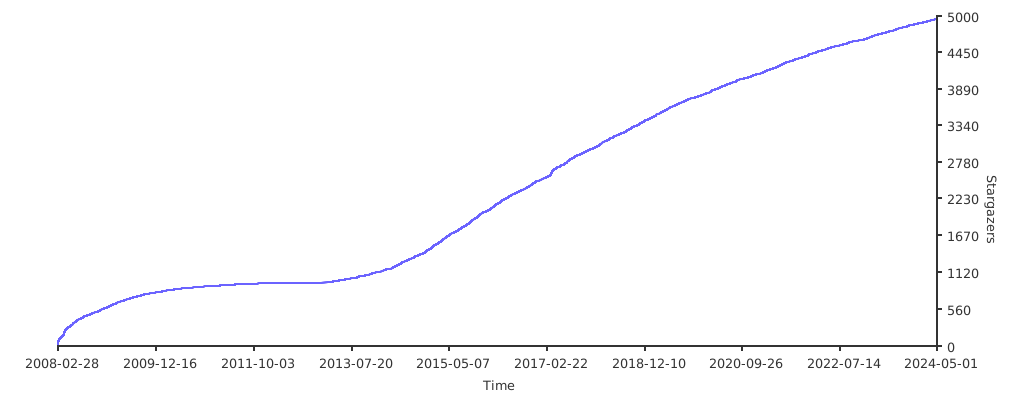
Stargazers over time
Contributing
Warranty
This software is provided “as is” and without any express or
implied warranties, including, without limitation, the implied
warranties of merchantibility and fitness for a particular
purpose.
License
Copyright © 2006-2017 Scott Barron
Permission is hereby granted, free of charge, to any person obtaining
a copy of this software and associated documentation files (the
“Software”), to deal in the Software without restriction, including
without limitation the rights to use, copy, modify, merge, publish,
distribute, sublicense, and/or sell copies of the Software, and to
permit persons to whom the Software is furnished to do so, subject to
the following conditions:
The above copyright notice and this permission notice shall be
included in all copies or substantial portions of the Software.
THE SOFTWARE IS PROVIDED “AS IS”, WITHOUT WARRANTY OF ANY KIND,
EXPRESS OR IMPLIED, INCLUDING BUT NOT LIMITED TO THE WARRANTIES OF
MERCHANTABILITY, FITNESS FOR A PARTICULAR PURPOSE AND
NONINFRINGEMENT. IN NO EVENT SHALL THE AUTHORS OR COPYRIGHT HOLDERS BE
LIABLE FOR ANY CLAIM, DAMAGES OR OTHER LIABILITY, WHETHER IN AN ACTION
OF CONTRACT, TORT OR OTHERWISE, ARISING FROM, OUT OF OR IN CONNECTION
WITH THE SOFTWARE OR THE USE OR OTHER DEALINGS IN THE SOFTWARE.